
Sunday, 26 November 2023
"The Covid Inquiry gets worse by the day – can no one take responsibility for anything?"


Saturday, 4 February 2023
"Get back home woman and start hustling."

Liz says, to paraphrase, that she was told to "Get back home woman and start hustling" when the fatberg Boris Johnson finally clogged the sewer of public greed. Who told her that is a matter for another day but she did get back Jojo, built a bus, won the leadership and launched the most daring, most innovative economic policies the world had ever seen.
Sadly for Ms Truss, those pesky left-wing kids were waiting to pounce. The commie IMF and all the rest, putting the Maoist bovver boot into the danglers of derring do. And so she was defenestrated, despite her 49 days of brilliance. Shine on, you crazy diamnod wearer. But now, she smells Sunak's blood in the water and she begins the comeback with, well, self-serving guff. Read on, feel the trembling. They couldn't. Could they?
Sunday, 8 January 2023
Brexit is being surrendered to the declinist Europhile establishment, says Jacob Rees-Mogg

Jaw-droppingly grim, read and weep.
The United Kingdom has saved £191 billion simply by not being a member of the European Union. That figure represents the degree we would have been on the hook for what the Commission proudly calls "the largest stimulus package ever" and this excludes any contingent liability for the risk of bankruptcy of other EU member states.
This is just one of the major Brexit successes we have already banked. There has been a steady stream in recent years. Some large, such as the vaccine rollout, some apparently small but which will have great impacts, as with the changes that will allow gene editing and unleash agricultural innovation. Others are still wending their way through Parliament, like the Financial Services and Procurement Bills.
Brexit has achieved the primary goal of restoring democratic control. This is a momentous thing in itself and needs no further justification. The right of people to choose how to be governed is the most powerful right there is. Yet Brexit is also a means to an end. The economic success of democracies in the long run tends to be better than autocracies, but as Allister Heath has previously written so clearly in these pages, we cannot simply sit back and assume success will come our way.
Now that Parliament has the right to govern, and the Government the right to lead, will they take the risks that lead to growth or will they bask in the comfort of the waning sun that once shone so brightly over Europe?
Some 4,000 EU laws lie mouldering on the statute book, passed without Parliamentary scrutiny and sometimes against the wishes of HM Government. Fourteen hundred of them are so obscure that they had to be dug out of the National Archives. This was the practical effect of membership of the European Union, unelected and unaccountable, whose laws spewed forth from Brussels and which had, at most, a cursory debate in the Commons, but could be neither amended nor blocked.
The Retained EU Law Bill (REUL), which as a minister I was involved in preparing, is designed to release us from this burden. It would require that all these laws, which intrude across British business and personal life, are either repealed or are turned into UK law. The Bill prevents them being extended, which would allow over-zealous bureaucrats to use a deregulatory measure to regulate by sleight of hand. Suffice to say that this is a task that any competent government department ought to be able to manage smoothly.
All the old files explaining these rules will be available: the purpose of each should be perfectly clear. For those laws that were really necessary, transposing them into UK law will add clarity to the statute book by removing a separate and alien legal code. Yet we are told that the Government now hesitates, advised by civil servants that many hundreds of new colleagues would be needed.
The implication is that our Rolls-Royce departments are incapable of going through the law books with a highlighter pen. This is obstructionism dressed up as idleness. Civil servants are more than capable of the task, which ought to already be under way.
These laws and regulations were imposed by an EU system that does not function and is in the process of making Europe poorer, not to mention making the rest of the world poorer too. Its burdensome, anti-competitive, innovation-destroying rules serve only to keep sluggish incumbent corporations out of the insolvency courts. Indeed, this system will ultimately bring to an end the unique period of European prosperity that Britain unleashed through the Industrial Revolution in the 19th century.
Because the opportunity of Brexit allows us our freedoms, it is of the utmost importance that the United Kingdom diverges from this EU model. And since we must lift the burdens of excessive regulation and unleash the competition on which innovation and wealth depend, protected industries that charge consumers high prices are bound to be displeased by these changes and can be expected to lobby furiously against them.
Yet policies that are pro-consumer and reduce prices ought to be welcomed in an era in which the spectre of inflation has returned. No one is talking about a Wild West without consumer and health protections – of which the UK was incidentally a pioneer long before the EU, the Sale of Goods Act 1893 being an early example.
Reducing regulatory burdens across the economy is fundamental to our future prosperity. So it is a particular concern that the Government is apparently being led away from the related initiative of "regulatory budgets". These would make sure that governments know the total economic effect of regulations before they impose them, instead of using them as virtue-signalling totems.
For example, was the cost of the lights going out – or of dependency on volatile energy prices from other sources – considered when almost all our coal-fired power stations were blown up? There ought to have been a budget to outline the potentially high cost of an apparently medium risk.
The inheritance of the EU regulatory system is now an urgent problem across our economy, not least for the steel industry. After Brexit, the UK took the EU’s Emissions Trading Scheme (ETS) and gold-plated it to make it even more costly. This is rendering steel firms virtually unviable, like other energy-intensive industries on which many of our regions depend. The result is that the government needs to bail them out through subsidy.
This is a merry-go-round of cash that serves only the interests of the ever-expanding state, because it does not even achieve its green aims: Britain’s heavy industries are already among the greenest in the world and burdening them with such regulations forces us to import from more polluting economies.
If there had been proper regulatory budgeting, these high-minded, nice-to-do regulations would have been exposed. Instead, the Government now risks killing the British steel industry, destroying jobs while increasing emissions worldwide. If the ETS is not to be done away with entirely it needs urgent and deep reform at the very least. Yet this is just one example. The economy does not have to work in this way.
Budgeting properly for the regulations we impose on the economy does not mean that governments will never regulate, but it will mean that they are forced to be honest with voters about what the costs will be. So many regulations are admired as worthy without consideration of the economic consequences. Surely one of the lessons of the Covid lockdowns is that a greater analysis of the costs ought to have been done. This logic should be applied more generally.
Perhaps it is not surprising that those who still resent the result of the referendum do not want the burdens of over-regulation to be lifted. It is pointless to try to understand all the Remainers’ ultramontane and sacred mysteries, but some clearly want to see us tied into the EU in the hope that, even if the UK is not a member, we can shadow its rules and embrace its inefficiency, or the Hilaire Belloc principle of "always keep a-hold of nurse for fear of finding something worse", the mantra of managers of decline throughout the ages. Some refuse to acknowledge the connection between prosperity and a free and self-governing democratic system.
In a perversion of logic, a lordly Times columnist has even called the REUL Bill undemocratic. Laws that came in without scrutiny or consent but were pushed through under the European Communities Act must therefore be kept, possibly because the House of Lords, that most democratic of bodies, does not like it.
A referendum result said that the UK wanted to take back control of our money, laws and borders. A general election result comprehensively confirmed that decision. But most of the work has not been done. Payments to the EU continue, the borders remain leaky and the laws have not yet been repatriated.
The REUL Bill provides the greatest possible impetus for completing this task. It establishes a mechanism for the removal and reform of these regulations with far greater scrutiny than they received when originally introduced. Legislators in both houses will be able to exercise fully the sovereignty of Parliament in areas where they were once entirely subordinate to the European Commission.
A repeal and reform of huge swathes of financial services regulation would make the City more competitive and dynamic now it is outside the EU, to the benefit of the UK. It is European regulations and decades of case law which have helped to jam up planning and development, whether by the Habitats Directive or the European Court’s 2018 ruling which has barred planning permission for hundreds of thousands of homes while the UK suffers an acute shortage of housing.
If we are to learn a single lesson from the pandemic it is that top-down, box-ticking and process-driven bureaucracy is the way to ruin, as the communist Chinese are now discovering. And if it were not for Boris Johnson’s determination to blow away the risk averse process to vaccine procurement – for which he was widely attacked at the time – we would not have recovered from the pandemic as quickly as we did. Were it not for the rapid repeal of many unnecessary EU regulations around HGV licences, the lorry driver shortage of 2021 would not have been eased in time for Christmas, while labour shortages continue to plague the Western world.
The successes of Brexit are already legion. The REUL Bill offers the opportunity to change fundamentally the way Britain is governed and do so for the better. But there is a risk of this being lost now, at this late moment.
What type of defeatism is it that would have a Bill passed by the democratically elected House emasculated by Europhile peers? What type of idleness is it that besets senior civil servants, allegedly working from home, who are murmuring that this is all too difficult? What type of government would it be that fails to deliver on its cornerstone promise?
Thursday, 29 September 2022
Liz Truss has offered sound economics, but terrible communication, says David Frost

Frostworld is a horrible place but I read the article and so must you. Ho ho. Text below.
Wednesday, 17 August 2022
Jacob Rees-Mogg lies and gaslights (Telegraph)

Text of srticle follows for those who haven't yet cracked the DT's miserable attempt at a paywall.
Saturday, 23 July 2022
Liz Truss: I'm the insurgent candidate in the Tory leadership race

It is thin pickings - "I'm right on everything but you don't know what that is" - and the tone is both disturbing and cloying. Read on to be unenlightened.
Unlike Rishi Sunak, the moment Liz Truss found out she had made the final two in the race to be the next prime minister was not captured on camera and released. But by the sounds of it, the celebrations were no less restrained than her rival's fist pump and cheer.
"I yelped with delight," recalled the Foreign Secretary, looking back to 4pm on Wednesday. "There was lots of hugging and back-slapping." Someone opened the chilled white wine. A celebratory photograph of the team was taken. Then more cheer on the House of Commons terrace.
By Ms Truss's side were her daughters: Frances, 16, and Liberty, 13. Unusually for a political campaign, both children have been joining their mother at her headquarters to help make her the country's most powerful politician - some summer holiday project.
"My oldest daughter's working on the digital team," Ms Truss said. "She's done a computing GCSE so she's helping out on that. And my younger daughter was there as well, giving general political advice."
The family - Frances, Liberty and Ms Truss's husband Hugh, 48 - had been planning to go to Disneyland Florida this summer. Three times, the trip had been postponed as the Covid-19 pandemic dominated. The others are still going, but for Ms Truss it is fourth time unlucky.
Meeting The Telegraph for her first newspaper interview since reaching the second phase of the leadership contest, Ms Truss, 46, still seems on a high from making the final two, who now face a summer campaign before Tory members decide.
Already the result is fading, but it is worth remembering just how much of a close-run thing it was. Penny Mordaunt, the trade minister, had been in second place for all the opening four ballots, positioned to join Mr Sunak above the ultimate cut-off point. A defeat loomed.
Ms Truss only took second place on the final ballot by getting eight votes more than Ms Mordaunt, out of an electorate of 358 Tory MPs. Put another way - if five MPs had switched from the Foreign Secretary to Ms Mordaunt, she would have been knocked out.
But they didn't, and it is a beaming Ms Truss who greets The Telegraph on the first floor of her homely campaign headquarters in a plush residential street near Parliament. The exhaustion that the rollercoaster last fortnight must have brought is not evident. "Adrenaline," Ms Truss explained.
The building is just a stone's throw away from the headquarters of the man who now stands between her and Number 10. Ms Truss is planning to brief the press like Mr Sunak did a few days earlier, but won't be handing out branded sun cream ("guaranteed protection against Labour") like her rival's camp.
"Only blood, sweat and tears on my campaign", she joked.
For the first half of this race, Ms Truss has been the underdog. It is Mr Sunak, the former chancellor, who was first on every MP vote. But those roles have reversed, according to the bookmakers - and Mr Sunak himself.
It is a framing that Ms Truss counters. "I see myself as an insurgent because I want to change things," she said. It is an eye-catching word choice. So is Mr Sunak the establishment candidate?
"I'm not commenting on the other candidate in the race. I'm putting forward a positive agenda. But we do need things to change," she said.
"We have had low growth for two decades. We now face a massive global economic shock after Covid and with the war in Ukraine. And this is a pivotal moment for our country. Do we continue with business as usual? Or do we do things differently, be bold?
"I want to do things differently and be bold so that we become a high growth, high productivity, powerhouse."
The stance is in some ways curious. Ms Truss has been MP for 12 years, representing South West Norfolk, compared to Mr Sunak's seven years. She was in the Cabinet before her rival even entered Parliament and has held five Cabinet briefs, compared to his two.
And yet it is Mr Sunak who is being framed as the "business as usual" candidate. In a race defined so far by economic policy differences, Mr Sunak is promising to continue the tax and spend trajectory which he set in the Government.
Ms Truss has pledged more than £30 billion in tax cuts, all paid for with more borrowing - yet denies it would fuel inflation. She has also widened out her attack on the status quo, railing against Whitehall's approach in the last 20 years.
Is it all too good to be believed? Mr Sunak has argued so, dubbing the idea you can slash taxes and somehow control inflation a "fairytale" which will damage trust among the electorate, as it would be undeliverable.
So does Ms Truss actually have a plan to bring down inflation? "Inflation is forecast to come down next year," she said. But the forecasts keep being wrong? "Well, some forecasts are wrong," she fired back - which sounds like a dig at the Bank of England, though the target is not named.
She went on: "I believe it is right that inflation will come down because inflation was caused by a global supply shock. But it was exacerbated by monetary policy. What I have said is in the future I'm going to look at the Bank of England's mandate. It is set by the Treasury. It was last set by Gordon Brown in 1997."
It is a line Ms Truss has said before. So what, actually, would she change about the mandate? "What I want to do is look at best practice from central banks around the world, look at their mandates, and make sure we have a tight enough focus on the money supply and on inflation."
So change the mandate for the independent Bank of England to do less quantitative easing - ie, printing money? "Well, I'm not going to say," she said. "What I want to do is conduct a review of that mandate. But I will look at and the chancellor will look at what the best practice mandate looks like."
Ms Truss's position on tax cuts and their relative merits has been well aired this week. Less so her stance on spending. She told reporters in a press briefing on Thursday that she was not considering spending cuts.
But that would mean keeping public spending rising to its highest level in 50 years, a part of Mr Sunak's legacy that Truss backers such as Jacob Rees-Mogg, the Brexit minister, have used to dub him a "socialist chancellor"?
Pushed for more details, Ms Truss said she would hold a spending review alongside an emergency budget if she wins. But she played down the possibility of reducing departmental spending, which has been set to 2024.
She does suggest welfare spending is one area savings could be found, however. "The best way to get welfare spending down is to help people get into work, and that is my priority," she said.
"We do have people who are not currently in work. We've also got a huge number of vacancies and a huge demand for staff. So we need to get the skills right, get the training right, help people into work, encourage people into work, give them the support they need to get into work. That's the way we get the welfare budget down. But those things take time."
One Boris Johnson spending promise she is keeping is the £36 billion extra he put into the NHS and social care, even while reversing the instrument for raising the money - the 1.25 per cent increase in National Insurance which kicked in this April.
It remains unclear when the money, initially given to the NHS, will move across to help fund the new social care approach of capping lifetime costs. Many commentators and Tory MPs expect taking away the money from the NHS, as planned, will never happen.
But Ms Truss is resolute that the money should switch over. "I want it to go into social care. I think that is very, very important," she said. "And in fact, by putting it into social care, we help relieve the pressure on the NHS. Because what we have is people who are currently, regrettably, stuck in hospital because there aren't the social care places available. So it's very important that we put it into social care."
Whether she would also stump up the money to keep the NHS budget at its current level when that happens is unclear.
Another area where Ms Truss is framing herself as more radical than Mr Sunak is building on Brexit.
Her Remainer status - she voted to stay in the EU in the 2016 referendum, unlike Mr Sunak - is seen as an Achilles heel by her political opponents.
But will that prove as politically disadvantageous as some hope? She points to securing trade deals and pushing the Northern Ireland Protocol Bill through the Commons to back up her argument about "delivery", and has some prominent Brexiteers on her side.
On Saturday, Ms Truss will announce that all EU legislation transposed onto the UK statute books will be given a "sunset" clause by the end of 2023 - meaning a decision will be taken on whether to keep, amend or scrap around 2,400 laws by then. Mr Sunak has made a similar promise.
Could the audit really be done in less than a year and a half? "I'm a great believer in deadlines, because that's what motivates people to get things done," she said. "It's already been six years since people voted to leave the European Union. We've still got these laws on our statute books and they're holding us back."
There are similarities between the candidates in another policy area too, if Ms Truss is to be believed.
Mr Sunak this week claimed credit for stopping a national lockdown during the surge of the omicron variant of Covid-19 before last Christmas. It was hours away from being announced at a press conference, the former chancellor claimed.
So did she privately urge against lockdowns during the pandemic? "I've been pretty much against the lockdowns and wanting them to be as short as possible," Ms Truss said. "I think it was a mistake for us to close schools. I think it's had a huge impact on children."
But some have suggested she was on the more supportive end of the Cabinet debate? "I never spoke out in favour of a lockdown," she said, referring to private Cabinet meetings - although she made clear that she backed the early restrictions when Covid struck.
Ms Truss said she was "very concerned" about the proposed lockdown during the omicron wave - like Mr Sunak - but will not be drawn on whether she opposed the one imposed in late 2020.
"I will have to sort of review my records to see. But in general I have been pro ending lockdowns as early as possible and I have been pro opening up more countries on the green list," she said.
Away from policy, the reality of running for leader is beginning to set in.
In modern politics, communication can shape success as much as substance and critics have accused Ms Truss of scoring poorly on that test. To boil down one common criticism, her public delivery is judged by some politicos to be too wooden.
How would she counter the suggestion she does not have the charisma to win the Tories a general election? "I'm not the slickest presenter. I completely admit that," she said, appearing to have thought through how to counter the charge.
"But I am somebody who what you see is what you get. I'm a straight-talking Yorkshirewoman. I don't take no for an answer and people understand that about me. I absolutely believe that with the vision that I've set out, with the delivery I've shown I can do from day one in Downing Street that I can win the next election, I can beat Keir Starmer."
There was time for a few quick denials. Ms Truss would not bite when asked if she will appoint Lord Frost, the former Brexit minister now backing her campaign, as chancellor.
"I'm not speculating about any Cabinet jobs," she replied. So you have not promised anyone Cabinet jobs? "No I haven't." Really? "No" - a double categorical denial.
Similarly, Ms Truss suggested that the current Prime Minister is not cheering her on, despite his apparent cold fury at Mr Sunak's resignation, which triggered the ministerial stampede that brought him down.
She has not talked to Mr Johnson since she made the final two. "He is not backing any candidate," she added.
For the Truss family, this will be a strange summer. Ms Truss has been around politics for more than a decade but has only headed up a great office of state for less than a year.
Even in the last fortnight, there has been an apparent jump in her public profile, with more hollers of recognition on the street and requests for selfies.
Does the family know what is coming? "I think there's a dawning realisation that this is real," Ms Truss said. "I think my daughter's friends at school are quite amazed by what's happening. Hugh is very, very supportive of what I do in politics. In fact, we met at the 1997 Conservative Party conference. He's a true blue. But I think it's all happened quite suddenly."
The family would move into Downing Street if she wins, she said. Her husband is an accountant and, according to Ms Truss, will not seek the limelight. "He doesn't want to have a sort of massive public role, I think it's fair to say," she said. "He goes out campaigning for the Conservative Party. He's very active as a local Conservative member. But he's a very stoic person."
For her daughters, the world of politics feels a natural fit. As the interview wrapped up, Ms Truss introduced The Telegraph to Frances and Liberty. The teenagers rush across from a corner of the campaign headquarters to greet their mother.
"I'm doing an audit of all your past departments," Frances, the elder sister, declared. So which was her favourite? The Department for Environment, Food and Rural Affairs, she said, because of the tea ladies. "They gave us orange juice and lots of KitKats".
The girls have made one other request of their mother - that they can hold sleepovers if they do make it to Number 10. So did she say yes?
Ms Truss's message to her daughters is the same to her campaign staff and the bookies' predicting she will be the next prime minister: "Don't get ahead of yourself."
Tuesday, 5 July 2022
It is time for Boris Johnson to go says David Frost

Bilge, pure bilge.
No-one is more downhearted than me at the events of the last few days. Over the years, I have worked as closely as anyone with Boris Johnson. I know, therefore, that he is a remarkable man and a remarkable politician. Only he could have cut through the mess left by Theresa May and delivered on the verdict of the people in the Brexit referendum. He took the country with him through the pandemic and has shown huge leadership on policy towards Ukraine.
But this country now faces formidable challenges. Facing them requires not just the ability to talk about a vision but the determination and steeliness to establish a credible pathway to it. It requires a leader who knows where he wants to take the country and can set out how he intends to get there, in a way that is consistent with the traditional Conservative vision.
I had hoped Boris Johnson could be that person, but I have realised that despite his undoubted skills he simply can't be. As I have often said, his Government has drifted far too much to the Left on economic matters, not only on tax and spend but by being too quick to regulate and too willing to get captured by fashionable trivia. It is tax-raising while claiming to be tax-cutting, regulatory while claiming to be deregulatory. It purports to be Conservative while too often going along with the fashionable nostrums of the London Left.
Getting economic policy right comes from the top. Every successful Prime Minister needs an economic philosophy that guides them through successive decisions and which enables their team to act in a way that is in line with their instincts without constantly asking what to do. I can't honestly see what this Prime Minister's economic philosophy is, beyond the content-free concept of "levelling up", and accordingly I no longer believe we will ever see a consistent drive towards low taxation, low spending, attractiveness to investment, and deregulation on the scale needed.
But even more than that I have become worried by the style of government. The whole partygate affair could have been dealt with more straightforwardly and honestly by setting out right from the start what had gone wrong in No 10, taking responsibility, and explaining why it would not happen again. By the time those things had been said, they seemed to have been dragged unwillingly from the Prime Minister rather than genuinely meant. Accordingly they lacked credibility.
Last month it seemed there might be a fresh start. Partygate was in the past. It seemed possible to set out a new way forward. But unfortunately first of all the Prime Minister said he had no intention of changing, and then, next, he set about demonstrating that unambiguously.
The Prime Minister refused to undergo a "psychological transformation". No-one was asking him to. They were asking him to change the way he ran his government and to put systems in place to ensure that the errors of judgment of recent months would not be made again.
The Pincher affair then showed in a real-life case study that was not going to happen. Confronted with a problem which appeared to reflect badly on the Prime Minister's judgment, we saw once again the instinct was to cover up, to conceal, to avoid confronting the reality of the situation. Once again that instinct, not the issue itself, has become the story and the problem. Worse, this time round, ministers have been sent out repeatedly to defend suspect positions that came apart under closer examination. This is no way to run a government.
Every Prime Minister, past, present, and future, has strengths and weaknesses. The crucial thing is to be aware of what they are and to have a team around them that can compensate for the weaknesses and help deliver results for the government as a whole. I have to conclude that the repetition of the same mistakes, and the refusal to acknowledge the need for change, means that this Prime Minister is never going to get better. Given the challenges we face, this country can't afford that.
I resigned from the Government on a matter of principle. Last night Sajid Javid and Rishi Sunak did the same. Other Cabinet Ministers now need to consider whether they are truly happy with the current direction of travel.
Boris Johnson's place in history is secure. He will be one of the past century's most consequential prime ministers. If he leaves now, before chaos descends, that reputation is what will be remembered. If he hangs on, he risks taking the party and the Government down with him. That's why it is time for him to go. If he does, he can still hand on to a new team, one that is determined to defend and seek the opportunities of Brexit, one that is able to win the next election convincingly. That is in the Conservative Party's interest, in Leave voters' interest, and in the national interest. It needs to happen.
Lord Frost was the United Kingdom's Chief Negotiator for Exiting the EU and served as Brexit Minister in Boris Johnson's Government
Thursday, 17 March 2022
Telegraph Libelled Laura Murray: A Grudging Apology
The apology has been hidden in the Telegraph's Corrections and Clarifications section, behind a paywall, so here it is for the honest reader.
Friday, 11 March 2022
The Ukraine crisis has humiliated the EU says Camilla Tominey

Yes, folks, Camilla has dusted off her strawmen and ridden into battle against the European furrins and the remoaners who sully our sceptred rouble land.
The usual risble bile but here's the article anyway (as a service to the 99.9% of the population who won't subscribe to the Telegraph).
Sunday, 30 January 2022
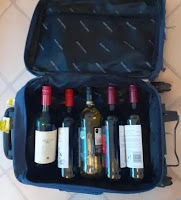
The Work Meeting at Cana
Sunday, 9 January 2022
"I will trigger Article 16 if the EU does not cooperate" says Liz Truss

Amongst the highlights, Ms Truss stirringly claims "As a sovereign nation, we cannot be in a situation where we have to notify the EU to provide vital support to businesses" but also "we agreed with our European friends arrangements under our Trade and Cooperation Agreement - including on the control of subsidies."
Wednesday, 16 June 2021
Post-Brexit Britain should light a bonfire of EU red tape to fuel economic growth, say MPs

It probably won't surprise you that these numpties want to slash red tape, that old standby of governments bereft of ideas. Governments that haven't learned that regulations save lives. Or perhaps just governments that don't give a toss about lives, for whom "health and safety" is just a pin to prick Mail readers' ire glands.
It also won't surprise you that two senior journalists at the Telegraph have given them an uncritical write-up. Read on and sigh deeply ...
Thursday, 10 June 2021
The imperial EU is blind to the folly of its unequal Northern Ireland Brexit treaty

"The [Northern Ireland] protocol isn't a just law. It was imposed on the UK by Brussels at the moment of our greatest weakness," Allister tells us, and likens it to treaties forced on the Qing dynasty. By, er, Britain, mainly.
Read on for the full text of Allister's magnificent nonsense.
Tuesday, 11 May 2021
Ask to see my ID card and I'll eat it: Boris Johnson 2004

And who wrote, in typically tired and emotional prose in 2004, that id cards were an abomination? Why, the MP for Henley, a certain Boris Johnson. Jolly amusing. Text below.
You know what you need on these dark winter mornings, when you get into your freezing car, and you sit there in a state of shivering depression, because the windscreen has been frosted to damnation, and the wipers are too puny to make any difference?
I'll tell you what you need, my friend. You need an ID card! Just take one of the new £85 biometric Blunko-cards, and scrape-scrape, hey presto! Frost's all gone.
Or suppose you are mandated to take the kiddies for a bracing walk on the heath, and you've had the forethought to bring some cake, but you've forgotten the knife. Well, never mind: say goodbye to no-knife misery with the allpurpose Blunko-slicer.
Yes, folks, I bet we can all think of 101 uses for the forthcoming ID cards, not forgetting breaking and entering, or perhaps even using it as a kind of strigil, as they did back in ancient Athens, to scrape off the mixture of sweat and olive oil when you have been for an exhausting run.
I am sure that we will all find it a handy, if expensive, addition to our wallets and handbags. But I tell you this. If I am ever asked, on the streets of London, or in any other venue, public or private, to produce my ID card as evidence that I am who I say I am, when I have done nothing wrong and when I am simply ambling along and breathing God's fresh air like any other freeborn Englishman, then I will take that card out of my wallet and physically eat it in the presence of whatever emanation of the state has demanded that I produce it.
If I am incapable of consuming it whole, I will masticate the card to the point of illegibility. And if that fails, or if my teeth break with the effort, I will take out my penknife and cut it up in front of the officer concerned.
I say all this in the knowledge that so many good, gentle, kindly readers will think I have taken leave of my senses, and to all of you I can only apologise and add, in the words of Barry Goldwater, that extremism in the defence of liberty is no vice, and that I really don't know what I dislike most about these cards.
There is the cost: let us be in no doubt that, by 2012, when it is intended that the entire population should be compelled to carry one, the universal imposition of ID cards will amount to a kind of £85 Caesar Augustus-style tax.
There is the loss of liberty, and the creepy reality that the state will use these cards - doubtless with the best possible intentions - to store all manner of detail about us, our habits, what benefits we may claim, and so on.
Worse than the cost and the bother, however, there is the sheer dishonesty of the arguments in favour. If I understood Her Majesty correctly, her Government conceives of these cards as essential weapons in the "war" on terror.
But the maniacs who performed the 9/11 massacre would not have been prevented by ID cards: the problem was not their identities, but their intentions. And if a terrorist really needed a new ID card, it would probably not take long to procure a forgery, biometric or not.
All these points I have made these past few years, up and down the country, and the most frustrating thing is that these objections cut absolutely no ice (unlike, as I say, the cards themselves) with good, solid, kindly, gentle Conservative audiences.
It seems only the other day that I was in Wolverhampton, railing against the Labour Government for having produced the conditions that made ID cards necessary. "And I tell you this, ladies and gentlemen," I said, "if Labour had not made such a disastrous mess of our asylum policy, we would not now need these ID cards imposed on the entire population."
"So what!" the audience shouted back at me. "We want ID cards!" "Er, yes," I said, adding, "I tell you this, ladies and gentlemen, that if Labour had not so recklessly expanded means-tested benefits, so that more and more people have to undergo the humiliation of revealing every detail of their financial circumstances to the state, and so that we have more and more fraud, we would not need these ID cards!"
"So what!" yodelled my audience, "We want ID cards! We had them in the war! If you've got nothing to hide, you've got nothing to fear!" And they started gurgling and drumming their feet like the impis of Chaka, and I hung my head and gave up.
There in a nutshell, I thought, you had the eternal tension at the heart of conservatism, between the desire for liberty and the desire for order, and, in the case of ID cards, the frail cockade of freedom has been emphatically crushed by the giant descending rump of matronly authority.
My audience were all gluttons for freedom, if by that you meant the freedom to hunt, or the freedom to eat roast beef without the fat trimmed off. But they were perfectly happy to see their own liberties curtailed, if that gave the authorities a chance to crack down on scroungers and bogus asylum-seekers.
And there, I fear, the debate has come to rest. To all those who yearn for ID cards, and who would extinguish the flame of liberty in the breath of public panic, I make this final appeal. Read this week's Spectator, with its terrifying account by a man arrested and jailed for having a penknife and an anti-burglar baton locked in the boot of his car, and then imagine what use the cops could make of the further powers they are acquiring to inspect and control.
We are told by Labour that we are at "war", and it always suits governments so to scarify the population. In reality, we have a terrorist threat not obviously more persistent than that posed by the IRA, and our liberties are being lost because of the intrusiveness and incompetence of the Government.
Thursday, 29 April 2021
Mr Duncan Smith is incompetent and must go

Here he writes in the Telegraph, setting out his stall to lead to a land of libertarian milk and privatised honey. He got the power, for a while, and we got shafted.
The thoughts of Chairman Dom follow:
After the anti-euro campaign's advertisement, with Bob Geldof et al last year, the Tory high command gathered. "It's a piece of stupidity," said one current leadership candidate. Another said, "We need another 'Save the pound' day." I said that the prospect of another "Save the pound" day could only confirm that we were clueless about effective political action. Iain Duncan Smith said: "We all agree. It'll keep the members happy - but the media won't notice."
(I clutched my head, but reflected that it was not as bad as a recent meeting in which the same cast of characters had described the party's salvation as: "Labour's computer system in the 1997 election - we need one"; "a campaign to persuade people Railtrack is good"; and "we need a blizzard of attacks"; then - the inevitable - "We all agree.")
The proposer of the "Save the pound" day asked, "Is this PMQ territory, Leader?", which was the daily reminder that we would achieve nothing. Afterwards, Conservative Central Office's top officials clutched their heads and said, "They'll have forgotten about it by tomorrow and we'll do nothing anyway." Thus, another shocking day began in Tory-world.
Mr Duncan Smith is incompetent, would be a worse prime minister than Tony Blair, and must be replaced. He is, however, the symptom rather than cause of a party desperately short of the political essentials: understanding, talent, will and adaptation. Even the most acute observers ask, "Why did they do that?", searching for a rationale. But they ought instead to think about Soviet institutions: when one considers these, one emerges thinking not, "Why did they do that?", but, "Given the people and structures, how could they do anything other than fail?"
There are many talented people working for the party who have been failed dismally by the leadership. The party is a joke - around the country, people increasingly laugh at "the Conservative Party". Senior figures do not try, which makes it impossible to motivate a successful team. The management structure is institutionally incompetent. Their language defines them as a separatist caste rather than national representatives. They do not understand that Mr Blair's failure is a necessary but insufficient cause of people saying: "The Tories are preferable". They do not understand modern society, communications.
When I arrived, there was no forum whatsoever for discussing medium-term planning - they literally had no idea what they were doing, and it took me a month just to initiate a group to discuss the point of the party. They dismiss the concept of building intellectual and political coalitions behind policy - a long, hard slog involving huge effort. "Events, dear boy, events" has been elevated to a management principle.
The meltdown of the Tories has occurred in parallel with the historically necessary pre-condition for a generational shift in opinion - the practical experience of failure, of "tax and spend", centralised public services, the EU, welfare, and "modern" policing. In all of these areas, the Tories should be transforming conventional wisdom and building new coalitions. Instead, we have failed in every area.
Tebbitites and some Portillistas have stuck us with a series of false dichotomies: the answer is neither "gay candidates", "soft on drugs", "be nice", and "image" - nor "tax cuts", "be proper Tories", or just "whack Blair". Success requires a synthesis of structural, policy, and communications transformation, as with all successful machines. It requires modernising communications and candidate selection - and the point is that these political techniques allow one to be tough on tax, Europe, and asylum. Mr Blair did not stop talking about the NHS and President Bush had a tax cut, but both knew that this was not enough. There is no magic bullet that will blow Mr Blair away.
All parties are suffering a talent blight because the crucible of democratic society - local civil society - is being destroyed by centralisation in Westminster and the EU. In the short term, the Tories must promote young, talented MPs. In the medium term, only if local politics becomes as important as it is in America (and was here) will a democratic renaissance be catalysed and services improved, via tough local competition for money, people, and ideas.
The theme of "trust people", which I proposed to Mr Duncan Smith in January last year but which has barely been developed, cuts across Europe; the Union; why services are failing and how to improve them; party reform (primaries) and constitutional reform; how we can cut national taxes and devolve services (such that local mayors can kick police out of their cars).
We need a moral explanation of why things are failing and why locals and families need to be empowered more and taxed less ("If you're on below average income, I'll send you a cheque for X"). The Right has, as Hayek pointed out, consistently failed to appreciate the critical importance of politics' moral front. Education and corporate governance reform ought to be the centre of the new leader's message (also necessary, since we will depend in coming decades on the exploration of new science and the survival of liberal markets).
We need a shift from trivial attacks to a coherent alternative; from reactionary whining to Reaganite optimism; from self-justification to adult honesty; from members' priorities to national priorities. We need an injection of intellectual thought and marketing talent, fused into a transformation of the policies, and constitutional change so non-MPs can fulfil executive functions.
The Tory collapse is particularly damaging given the threat we face from the transfer of enormous powers to an EU institutional matrix doomed to demographic collapse, economic decline and political extremism. We ought to be able to connect the ever-greater threats (new science, new powers, new terror) and political opportunities.
It is time for an alliance of serious Tories, donors and members to reflect on the maelstrom sweeping the globe and the party's true situation, and dictate a series of reforms that gives a chance of revival. When somebody said that nobody was capable of coping with the chaos of 1917, Lenin replied, "There is such a party!", and how right he (unfortunately) was. Who now will say the same?
• Dominic Cummings is a former director of strategy for the Conservative Party
Sunday, 25 April 2021
Johnson v Cummings, seconds out, round two

Times article follows: read on for a tale of spies and inaccurately-hurled mud pies.
Even Boris Johnson's closest allies have compared the prime minister to one of Shakespeare's most tragic heroes: King Lear. After arguably one of his toughest weeks in Downing Street, Johnson suffered his greatest betrayal when his once loyal lieutenant, Dominic Cummings, eviscerated him in a 1,000-word blog post.
Those close to Johnson fear the treachery of his former chief adviser, accused of "systematic leaking", has pushed the prime minister over the edge. Just like Lear, the PM has been driven half mad.
In his post, Cummings denied Johnson's claims that he leaked details of the second lockdown and the prime minister's texts with the billionaire Brexiteer Sir James Dyson.
According to friends, Cummings had one aim in posting the missive: to pre-empt a stitch-up by the "establishment" that could land him in prison — an outcome he has privately feared since details emerged of irregular spending during the Brexit referendum.
However, its toxic effect has been to destabilise the prime minister and the government. Aides are only too conscious that Cummings has nothing to lose and believe he has enough "kompromat" to "destroy" Johnson when he gives evidence on Covid-19 to MPs on May 26.
They are especially concerned about emails in which the prime minister is allegedly dismissive about the potential death toll from Covid — or quoted as being so. Others believe Cummings has embarrassing details of his links to Mohammed bin Salman, the Saudi crown prince, and Sheikh Mohammed, the ruler of Dubai.
In contrast, Johnson feels he has only one secret weapon: Cummings's failure to deny that he leaked his texts with bin Salman over the proposed takeover of Newcastle United football club, which never went ahead. "He was waving round that omission like it was the big reveal," said a source who spoke to him last week. "Otherwise, I think that's all he has."
For months, Johnson had been enjoying his most stable spell in government, thanks to the successful vaccine rollout. Now a combination of Cummings, leaks and sleaze allegations threaten to engulf him.
One Downing Street insider said: "After the departure of his closest aides last year, the prime minister has become increasingly isolated and paranoid. He has become known in some circles as the King Lear prime minister and we all know how that ended up."
Last week after days of leaks, including the publication of private text messages between the prime minister and Dyson more than a year ago, Johnson finally "snapped".
"It was like death by a thousand cuts," said one Downing Street aide. "But the Dyson leak was the last straw."
In particular, Johnson has been concerned by the disclosure of details about the refurbishment of his Downing Street flat amid claims it was circuitously funded by a Tory donor.
The Electoral Commission is investigating. By Friday, the Cabinet Office had confirmed in a statement to parliament that Johnson would foot a residual bill of £58,000 himself. He has already used up the improvements allowance of £30,000 to which all new prime ministers are entitled for "structural work". The parliamentary move and decision to pay was clearly designed to draw a line under the matter.
"When stories about the flat first started emerging Boris was really ranting and raving about," said one insider. "He was clearly very rattled by it." Another source added: "He would often have what I would describe as a Lear-ish moment and rampaging around Downing Street demanding to know who was briefing against him." Last month, after the latest story on the redecoration of No 10, Johnson explicitly forbade aides in his leadership team from even speaking to Cummings.
A person who spoke to Johnson last week said the prime minister was "convinced" that his former chief adviser had declared war on him from the moment he left Downing Street in November.
Carrie Symonds, the PM's fiancée, is understood to have played a pivotal role in the ousting of Cummings and had been encouraging Johnson to take action.
On Thursday, the PM decided to finger Cummings for the leaks. It is suggested he may have briefed newspaper editors himself. It was a co-ordinated hit with the story appearing in three newspapers. The Daily Mail, which has been the outlet for most of the leaks, was left out.
Few aides in No 10 now believe Johnson made the right decision in launching the attack on Cummings, prompting Friday's incendiary riposte. It is understood that he overruled advisers who warned him that the move was "suicidal".
Some blame the recent departure of so many once-trusted aides for the PM's "error in judgement". He is without many of the people who stood by him throughout his first year and a half in office. Cummings, once loyal, is gone. So too is Lee Cain, once described as Johnson's right-hand-man. The PM has told friends that Cain has repeatedly tried to contact him but that he has ignored his texts.
Allegra Stratton has been elbowed out as press secretary by male aides and is now spokeswoman for the Cop26 climate change conference. Her planned regular live TV briefings have been scrapped.
Lord Udny-Lister, who has advised Johnson since his days as London mayor from 2008 onwards, has quit amid the lobbying scandal and is expected to join the private sector.
It is believed Cummings has embarrassing details of Johnson's links to Mohammed bin Salman It is believed Cummings has embarrassing details of Johnson's links to Mohammed bin Salman REUTERS No 10 aides are keen to contain the row with just days to go until the local elections. A Conservative Party Central Office source said: "There has not been an impact on polling as of yet but you never know when the mood can change."
The churn at No 10 is said to have left Johnson "vulnerable" and at the mercy of two relatively inexperienced operators: Simon Case, the 42-year-old cabinet secretary, and Dan Rosenfield, 44, his chief of staff. Neither man is deemed to have much political nous or Cummings's "willingness to get down in the mud and fight".
For months, Rosenfield has helped stabilise the No 10 operation and inject an apolitical professionalism in the building. But he is also seen by some as naive.
For instance, he was accused of imperilling his own job and the government's credibility after welcoming Ed Woodward, the chief executive of Manchester United, to No 10 ten days ago and appearing to offer support for the controversial European Super League.
Sources claim Rosenfield's conversations with Woodward emboldened the English clubs to back the scheme, heralding the biggest crisis in the game for decades. No 10 insists, however, that the Super League proposals were not discussed at the meeting, which was convened to discuss the safe return of fans and Covid passports for games. Sources accept that Woodward may have briefly met Johnson and left with the wrong impression that he was in favour of the proposal. Indeed within hours of the Super League plan being revealed, Johnson publicly opposed it.
Case is the subject of anger after quickly announcing a review into officials moonlighting in private sector jobs. His approach is seen to have made Udny-Lister's job untenable, with Johnson's consigliere having stayed on the payroll of two property firms while at No 10.
Johnson knows that Case is in shark-infested waters. On Monday the cabinet secretary will give evidence to MPs where he will no doubt be questioned about Cummings. One incendiary claim is that, after learning that it could implicate Henry Newman, a friend of Symonds, Johnson sought to shut down a previous inquiry into who leaked details of Britain's second lockdown.
Allies of Newman furiously denied Cummings's suggestion that he was the "chatty rat". They added that the leak inquiry was still active and dismissed Cummings's claim that he and Cain had been exonerated.
Despite his public displays of bravado, Cummings has long been haunted by a fear that he could end up in prison: either over irregular spending during the Brexit referendum or his conduct in government. Allies believe this prompted his "nuclear" reaction — in effect, an attempt to get on the front foot and publicise evidence of his innocence. But opponents believe Cummings may be right to fear sanctions.
They claim that MI5 has concluded that one person sent a WhatsApp message from the cabinet room just before 6pm on the day after the meeting last autumn where the new curbs in England were discussed. Six people were present: Johnson, Cummings, Cain, another political aide and two senior officials.
According to this account, Cummings was aggravated by Johnson's indecision and felt he had not been firing on all cylinders since his illness. He therefore decided to leak the news to bounce Johnson into it. MI5, it is claimed, has established that one person in the room had two SIM cards linked to them. That person, sources insist, was Cummings.
Last night, a government official said: "The investigation is still live and it would be wrong to think we have landed on any one individual or, for that matter, completely exonerated anyone."
The question for Johnson is what the unpredictable Cummings will do next. "This falling out was never going to end well," conceded one source.
Sunday, 21 March 2021
Government poised to take over running of Liverpool, says DT
 Telegraph has an article, a sighting shot from the Tories one suspects, that the government is about to send the commissars into Liverpool to take control of the council. Many coulds and mights - it'll be interesting to see just what Max Caller's investigation has to say.
Here's the article (not much to say, really). And please, no snide comments on Robert Jenrick taking a decision on corruption.
Saturday, 13 March 2021
Lord Frost is absolutely right to be getting tough with the bullying EU, says IDS

He essentially says that Lord Frost can't trust vengeful Europeans and should kick them in the goolies at the start of every negotiating session. One wonders why David Frost, Chief Negotiator for Exiting the European Union from July 2019 to January 2020, Chief Negotiator of Task Force Europe since January 2020, didn't try this.
There's also a good pop at Olly Robbins, sneeringly referred to as "Sir Oliver" by Sr Iain. As Olly quickly found a lucrative post at Goldman Sachs after orally copulating EU negotiators (I paraphrase), I have little sympathy for him.
For those who feel like a splutter, read on for the full text of the Duncan Smith drivel.
Monday, 22 February 2021
A trade deal with India is the great Brexit prize that could determine the West’s fate: Dan Hannan

He goes on to call Liz Truss "the unstoppable Yorkshirewoman" so you can tell he was shroomed to the eyballs when penning his latest drivel.
For those who can't get past the DT paywal, here's the full article. Read and weep.</p?
Wednesday, 13 January 2021
Country people are sick of the woke BBC, says Ian Botham

The noble Beefy, a huntin', shootin', fishin' man (sidebar: why does Priti Patel drop her gs?) manages to cram 90% of Telegraph dogwhistles into one short column.
I, like many, have thought "the BBC doesn't represent me, what can I do? I know, I'll drop a line to Baron Botham" and he doesn't let us down. If you like your guff bluff, read on in this saga of local programmes for local folk.
Subscribe to:
Posts (Atom)